
What if the most rigorous competitive dance environment in North Carolina actually became your child’s safest space to thrive? It’s a common fear for parents that “competitive” is just another word for “toxic,” and many worry that the pressure of the stage will eventually overshadow the pure joy of the art. You want the elite training that pushes your dancer toward technical excellence, yet you’re also searching for a supportive community that feels like a second family and respects your family’s time and financial commitments.
Discovering how to find a competitive dance team NC offers is about more than just checking a studio’s trophy cabinet. This 2026 guide is designed to help you understand the local scene with absolute confidence, from evaluating studio culture to mastering the audition process. We’ll break down exactly what to look for in a “nurturing expert” environment, explain the reality of seasonal costs, and help you determine if your child is technically ready for the next level. You’re about to find a clear roadmap to a dance home where your child gains both elite skills and the transformative confidence to shine.
Key Takeaways
- Understand the North Carolina dance landscape by distinguishing between private studio company models and school-based teams to find your child’s ideal fit.
- Look for “Nurturing Experts” who focus on technical discipline and personal growth rather than just the number of trophies on the shelf.
- Prepare for the 2026 season with our step-by-step guide on how to find a competitive dance team NC studios host during late spring auditions.
- Gain full transparency on the financial and time commitments involved, from costume fees to the weekend rehearsal schedules that drive success.
- Discover how a supportive community atmosphere in Clayton can transform a high-pressure competition environment into a place of belonging and joy.
Mapping the Competitive Dance Scene in North Carolina (2026)
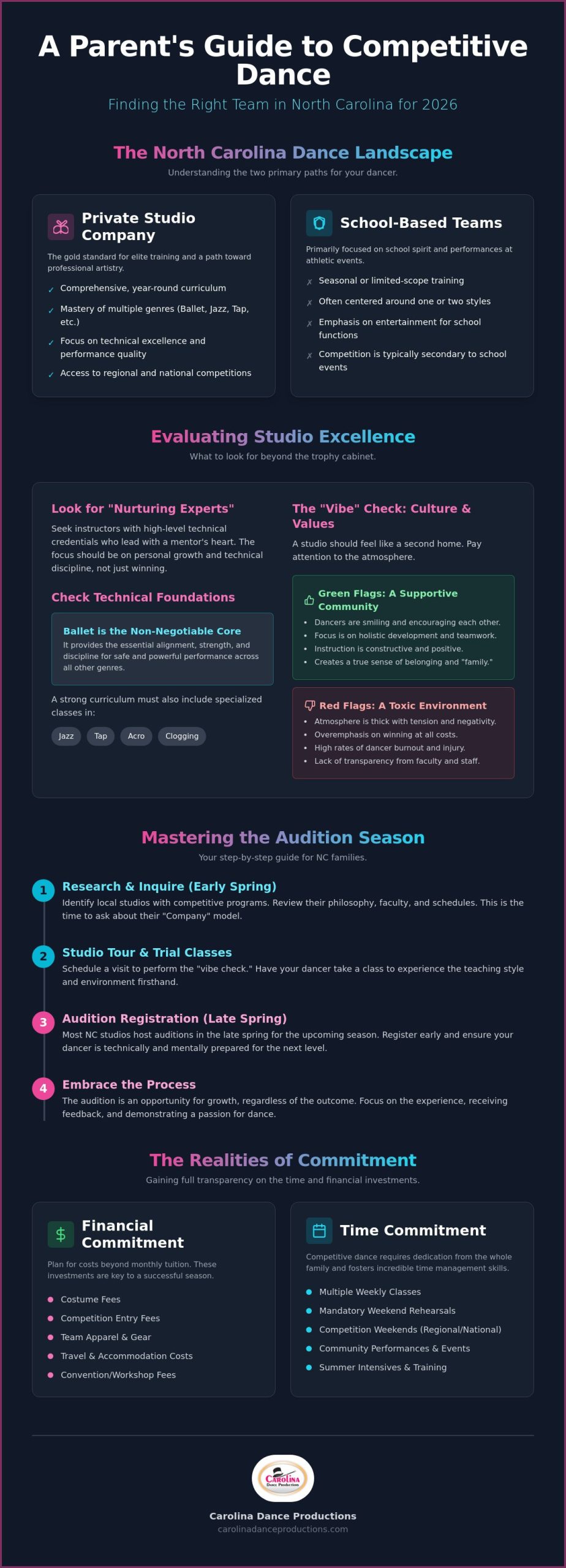
North Carolina’s dance community is vibrant, diverse, and exceptionally talented. If you’re currently researching how to find a competitive dance team NC families can rely on, it’s vital to understand the two primary paths available. While school-based teams focus heavily on school spirit and athletic events, private studio companies offer a comprehensive, year-round curriculum designed for dancers who want to master multiple genres. The private “Company” model is the gold standard for those seeking elite training and a path toward professional artistry.
Before diving into auditions, it helps to understand What is Competitive Dance? and how it functions as a sport and an art form. In the “Company” model, dancers are grouped by age and skill level to perform choreographed routines at regional and national events. North Carolina has become a massive hub for these competitions, with cities like Raleigh and Charlotte hosting major circuits that attract scouts and industry professionals from across the country. This concentration of talent makes the NC scene one of the most competitive and rewarding in the Southeast.
Recreational vs. Competitive: Making the Leap
How do you know if your child is ready for the leap? It usually starts with a hunger for more. You might notice your dancer practicing choreography in the kitchen or asking for more hours in the studio. Foundational excellence begins early, often with dance classes for 2 year olds that spark a love for movement and rhythm. The shift to competition means moving from simply learning steps to mastering performance quality and rigorous technique. It’s an exciting transition that requires both physical readiness and emotional maturity to handle a faster pace of instruction.
The Benefits of Elite Dance Training in NC
The impact of joining a competitive team reaches far beyond the stage lights. Elite training fosters incredible resilience and time management skills as dancers learn to balance schoolwork with a demanding rehearsal schedule. At regional events, students receive direct feedback from industry judges, which teaches them how to process constructive criticism and apply it immediately to their growth. Most importantly, the bond formed within a dedicated team environment creates a sense of belonging. At Carolina Dance Productions, we call this the “CDP Family,” where lifelong friendships are built on a foundation of shared passion and mutual support.
Evaluating Studio Excellence: Technical Standards and Cultural Fit
When you’re learning how to find a competitive dance team NC, it’s easy to get distracted by shiny trophies and tall banners. True excellence lies in the faculty and the environment they create; just as professional commercial spaces learn more about Polished Concrete Atlanta to ensure their facility’s flooring is safe and high-quality, a great dance studio prioritizes every aspect of its physical space. Look for “Nurturing Experts.” These are teachers who possess high-level technical credentials but deliver instruction with a mentor’s heart. A professional studio should offer a diverse curriculum that includes Ballet, Jazz, Tap, and Acro. In North Carolina, having a strong Clogging program is often a sign of a studio deeply rooted in the local community.
Checking Technical Foundations
Ballet is the non-negotiable core. Without it, competitive dancers lack the alignment and strength to perform safely. Specialized technique classes are essential. They focus on preventing injury and building the specific muscles needed for high-impact jumps and turns. Beyond the physical, the health benefits of dancing include improved cardiovascular health and psychological wellbeing. These are only maximized when training is technically sound. A great studio shows a clear progression. It moves students from introductory Baby Hop classes into elite training tracks as they mature.
The “Vibe” Check: Studio Culture and Values
Walking into a studio should feel like coming home. Pay attention to the atmosphere during a tour. Are the dancers smiling and supporting one another? Is the air thick with tension? A supportive environment fosters resilience. A high-pressure, toxic one leads to burnout. The Artistic Director’s vision is the heartbeat of the team. If their focus is on holistic development and family, you’ll see that reflected in every rehearsal. When researching how to find a competitive dance team NC, don’t be afraid to ask current parents about their experience.
- How does the studio handle mistakes or losses?
- Is the communication transparent regarding schedules and expectations?
- Do older dancers mentor the younger ones?
If you’re looking for a place where technical discipline meets a warm heart, touring a local studio is the best way to see these values in action.
Mastering the Audition Season: A Step-by-Step Guide for NC Families
Audition season in North Carolina is a time of high energy and immense possibility. For families in Clayton, Garner, and Smithfield, this window typically opens in late spring and stretches into the early summer months. It’s the moment when studios look for the next generation of “Company” members to represent their artistic vision. Understanding how to find a competitive dance team NC dancers will thrive on means recognizing that auditions are more than just a test of talent. They are an opportunity for your child to showcase their personality, work ethic, and ability to take direction in a professional setting.
Preparation begins long before the music starts. While your dancer focuses on their physical conditioning, your role is to research specific dates and requirements for local studios. Most professional environments will host interest meetings in April or May. These gatherings are vital. They provide a transparent look at the season’s expectations and allow you to see if the studio’s leadership aligns with your family’s values. During the audition itself, instructors typically lead dancers through “across-the-floor” progressions to assess technical basics like leaps and turns, followed by a short combination to test how quickly they can pick up new choreography.
The Audition Day Roadmap
Success on audition day is often a matter of organized preparation and a positive mindset. Follow these steps to ensure a smooth experience:
- Step 1: Register Early. Don’t wait until the last minute. Complete all paperwork and attend interest meetings to understand the specific “Company” tracks available.
- Step 2: Prepare Professional Attire. Visual discipline matters. Ensure your dancer has the required leotard, jazz shoes, and that their hair is slicked back and secure.
- Step 3: Arrive with a Buffer. Arriving 20 minutes early allows your child to stretch, acclimate to the studio space, and settle their nervous energy before the judges enter.
- Step 4: Emphasize Coachability. Judges aren’t just looking for perfect triple pirouettes. They are looking for dancers who smile, make eye contact, and apply corrections immediately.
Handling Results with Grace
Receiving team placements is an emotional milestone. Whether your child is placed in a Mini, Junior, Senior, or Elite track, it’s important to frame the results as a starting point for growth. If they don’t make the specific team they hoped for, remind them that “not yet” is simply an invitation to master their technical foundations. A truly nurturing studio provides a clear path for every skill level, ensuring that every student feels valued and challenged. At Carolina Dance Productions, we prioritize the individual journey, celebrating every placement as a unique opportunity for a dancer to shine within our supportive family atmosphere.
Budgeting and Scheduling: Navigating the Realities of Competitive Dance
Understanding the logistics is a vital step in learning how to find a competitive dance team NC families can sustain long-term. While recreational classes offer a wonderful introduction to movement, the competitive track requires a shift in how you view your weekly calendar and family budget. This isn’t just about more hours in the studio; it’s about an intentional investment in your child’s discipline, resilience, and future opportunities. High-level training is a marathon, and being prepared for the pace ensures the experience remains joyful for everyone involved.
Recreational vs. Competitive Commitment Breakdown
Recreational tracks usually involve one or two hours of class per week with a focus on foundational joy. In contrast, competitive dancers often double or triple that time to accommodate specialized technique classes in ballet, jazz, and acro. The official competition season in North Carolina typically runs from January through May, requiring dedicated weekends for regional events. A junior company member typically commits to four to six hours of core technique and rehearsal time per week during the peak season. Balancing these hours with schoolwork builds incredible time management skills that dancers carry into their academic lives.
Financial Planning for the Season
Transparency is the cornerstone of a healthy studio-parent relationship. Beyond monthly tuition, parents should plan for expenses that support the performance experience. These include custom costumes for each routine, competition entry fees, and media fees for professional stage photography. Professional studios in the Clayton and Raleigh area often provide detailed fee schedules months in advance to help families budget effectively. This clarity allows you to focus on your child’s growth rather than unexpected bills.
Travel is another factor to consider. Most regional events take place in accessible NC hubs like Charlotte, Greensboro, or Raleigh, keeping travel costs manageable for local families. National conventions might require further travel, but these events offer invaluable exposure to world-class choreographers and scholarship opportunities. When researching how to find a competitive dance team NC parents should prioritize studios that offer clear communication and organized travel blocks. The investment pays off as dancers gain technical mastery and the confidence to perform on any stage.
Why Carolina Dance Productions is the Premier Choice for NC Dancers
Choosing the right studio is a monumental decision for any dance family. When you research how to find a competitive dance team NC, you aren’t just looking for a place to learn steps; you’re looking for a community that will shape your child’s character. Carolina Dance Productions (CDP) has served as a pillar of the Clayton community for 23 seasons. We’ve built our reputation on a foundation of technical discipline and genuine, parent-like mentorship. For families in Smithfield, Selma, Wendell, and Garner, we offer a professional home where dancers are seen, valued, and pushed toward their highest potential.
Our studio is more than just a training facility. It is a place where the transformative power of the arts meets a deeply grounded sense of personal care. We understand the concerns parents have about the competitive world. That’s why we’ve spent over two decades refining a model that balances high-level instruction with an inclusive, welcoming atmosphere. From the moment you walk through our doors, you’ll feel the high-energy excitement that defines the CDP experience. We prioritize the emotional and developmental well-being of every individual, ensuring that the road to technical excellence is paved with support and encouragement.
The CDP Competitive Philosophy
Our Artistic Director, Lori Dew, leads a faculty of dedicated “Nurturing Experts” who believe that elite training and a supportive atmosphere must go hand in hand. We foster a “family first” team culture that intentionally eliminates the toxic drama often feared in the competition world. By prioritizing student well-being alongside technical excellence in Ballet, Jazz, Hip Hop, and Clogging, we create an environment where dancers feel safe to take creative risks. This holistic approach builds more than just great performers; it builds confident leaders. Our success stories speak for themselves. CDP graduates frequently move on to prestigious collegiate dance programs and professional careers, with some even branching into health and wellness through NPTI Florida, carrying the resilience and grace they developed on our stages into every facet of their adult lives.
Join the CDP Family for the 2026 Season
We invite you to experience the CDP difference firsthand. Whether your child is just starting in our Dance Play program for ages 2 to 3 or is ready for our Elite Competitive tracks, there is a place for them here. We offer a comprehensive menu of opportunities that evolves with your dancer’s skills and ambitions. To help you decide if we are the right fit, we encourage new families to schedule a studio tour or join us for a sampler class. This allows you to see our high standards and warm community in action before the 2026 season begins. Understanding how to find a competitive dance team NC becomes simple when you see our dancers’ joy and technical precision in person.
Preparation for our 2026 competitive team auditions is already underway. We provide transparent information regarding schedules and expectations so your family can plan for a successful year. If you’re ready to see your child gain technical excellence while building lifelong friendships, we are here to guide you every step of the way. Our commitment to equity and individual success ensures that every member of the CDP family has the chance to shine.
Ready to Step Into Your Child’s Brightest Future?
Your journey through the North Carolina dance world is about more than just finding a studio; it’s about discovering a second home where technical excellence and emotional safety coexist. By prioritizing a “nurturing expert” philosophy and understanding the logistical realities of the competition season, you’ve already taken the most important steps for your dancer’s growth. Learning how to find a competitive dance team NC families truly love means looking for a legacy of success that spans over two decades.
At Carolina Dance Productions, we bring 23 seasons of dance excellence to the Clayton, Smithfield, and Garner communities. Under the guidance of Artistic Director Lori Dew, we remain dedicated to the individual success and well-being of every student who walks through our doors. We believe that every child deserves a stage where they feel inspired to reach their full potential and build the confidence that lasts a lifetime.
The 2026 season is full of promise and excitement. We can’t wait to welcome your family into our studio and watch your child shine with brilliance, passion, and artistry.
Frequently Asked Questions
What is the best age to start competitive dance in North Carolina?
Most dancers begin their competitive journey between the ages of 7 and 9, though many studios offer “Mini” tracks for children as young as 5 or 6. Starting early in preschool programs ensures they have the coordination and focus needed for the stage. If you’re researching how to find a competitive dance team NC, look for programs that offer a gradual increase in commitment as your child matures.
How much does competitive dance usually cost per year?
The total cost of a competitive season includes monthly tuition, costume fees, and competition entry fees. Travel expenses and professional media packages also contribute to the annual budget. Leading studios provide a transparent fee schedule during spring interest meetings so families can plan their finances without surprises. This clarity helps you focus on your child’s growth rather than unexpected bills.
What is the difference between a “Company” and a “Competition Team”?
A “Company” model typically represents a higher level of technical rigor and a broader commitment to multiple dance genres throughout the year. While some use the terms interchangeably, a Company often focuses on holistic artistry and pre-professional training. Competitive teams may focus more on specific routines for seasonal events. Both paths offer valuable performance opportunities, but the Company track is designed for deeper technical mastery.
Does my child need to take ballet to be on a competitive dance team?
Ballet is the essential foundation for nearly every competitive style, including jazz, lyrical, and contemporary. It provides the core strength, balance, and alignment required to execute advanced leaps and turns safely. Most elite programs require at least one or two ballet classes per week to maintain a high technical standard. Without this foundation, dancers are at a higher risk for injury and technical plateaus.
How far do competitive dance teams in NC usually travel for events?
North Carolina teams benefit from a central location, with most regional events occurring in Raleigh, Charlotte, or Greensboro. This keeps travel manageable for local families, often requiring only a short drive or a single overnight stay. National conventions or championships may involve travel to neighboring states. These larger events offer dancers a chance to see a wider range of talent and learn from industry leaders.
Can my child do both recreational and competitive dance classes?
Many dancers successfully balance both tracks, using recreational classes to explore new styles like Hip Hop or Clogging without the pressure of a competition score. This variety keeps the experience fresh and prevents burnout. It’s a great way for dancers to maintain their love for the art while pursuing technical excellence. Studios often encourage this crossover to help dancers become more versatile performers.
What should we look for during a dance studio audition?
During an audition, faculty members look for “coachability” and a positive, high-energy attitude. They want to see how quickly a dancer applies a correction and whether they maintain focus during challenging combinations. It’s less about a perfect performance and more about the potential for growth within the team environment. When you’re figuring out how to find a competitive dance team NC, observe how the staff interacts with the kids.
How do I know if my child is ready for the “Elite” training track?
Readiness for the Elite track is signaled by a dancer’s internal drive and mastery of technical foundations. If your child is consistently practicing at home and asking for more challenging choreography, they may be ready for the leap. This track requires a significant time commitment and a high level of self-discipline. Consult with the artistic director to assess your child’s specific developmental milestones and readiness for more intense training.